Information is power in the world of trading, and that is what fraudsters take advantage of. Thousands of new traders fall into the trap of each new passing day, lured by the spurious promise of “sure-shot profits” or “100% accuracy” trades. How Fake Tips Providers Cheat Traders will help you save your money, your confidence, and your trading journey.
But let’s find out-what are the psychology, techniques, and red flags behind these scamsters, and how you can protect yourself.
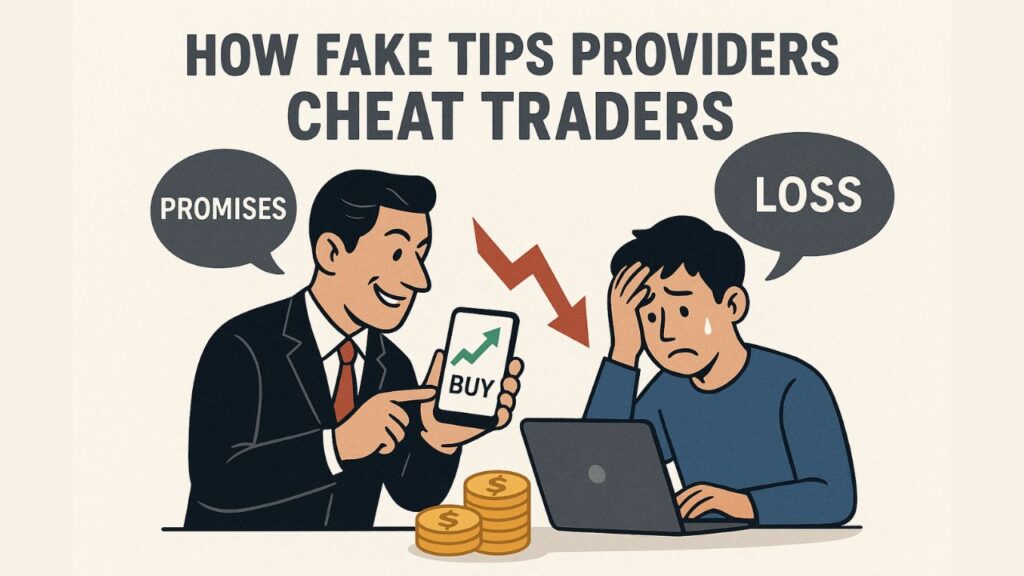
The Illusion of Easy Money
Trading looks very fancy on social media, with screenshots of high profits, expensive cars, and “just 1 trade per day” lifestyles. That’s where the trap begins.
Fake tip providers know that new traders want quick success. They use this emotion to sell “premium groups” or “paid calls.”
The first lesson in How Fake Tips Providers Cheat Traders is psychological manipulation. They make you believe that they hold a secret formula for consistent profits. But in reality, they’re only selling dreams.
They lure their potential customers by first giving free tips in order to gain their confidence. Because of luck or market momentum these calls might even work. Once you begin to believe in them, they pitch paid subscriptions, and that’s where the true scamming really begins.
How They Create a False Image of Success
The second layer of How Fake Tips Providers Cheat Traders involves the creation of fake credibility. They flood social media with screenshots of their profits-mostly edited, cherry-picked, or completely fabricated.
They use strategy like:
- Cropped P&L screenshots hiding loss trades.
- Backdated messages in Telegram groups show “perfect entry and exit.”
- Fake testimonials and “thank you” messages from bots or dummy accounts.
They want to make you believe that hundreds of traders are earning huge returns under their guidance. But when you try it yourself, the results are very different.
The Classic Pump and Dump Trick
Another major strategy in How Fake Tips Providers Cheat Traders is the pump and dump scam. Here’s how it works:
They pick a low-volume stock or penny share and send a “buy signal” to their followers. As hundreds of new traders buy, the price starts moving up, giving an illusion that their tip was correct. But these fake providers had already bought that stock earlier.
If you’ve ever joined a “premium tips” group, you might have noticed something strange: by the time you get the message, the price has already moved.
This is another trick in How Fake Tips Providers Cheat Traders. They send delayed signals that are already outdated. You enter the trade late and end up buying high or selling low, while they claim the tip was successful based on old data.
Some even send different signals to different groups, so no matter which direction the market moves, they can post one group’s “winning” result publicly and attract more victims.
Red Flags That Expose Fake Tips Providers
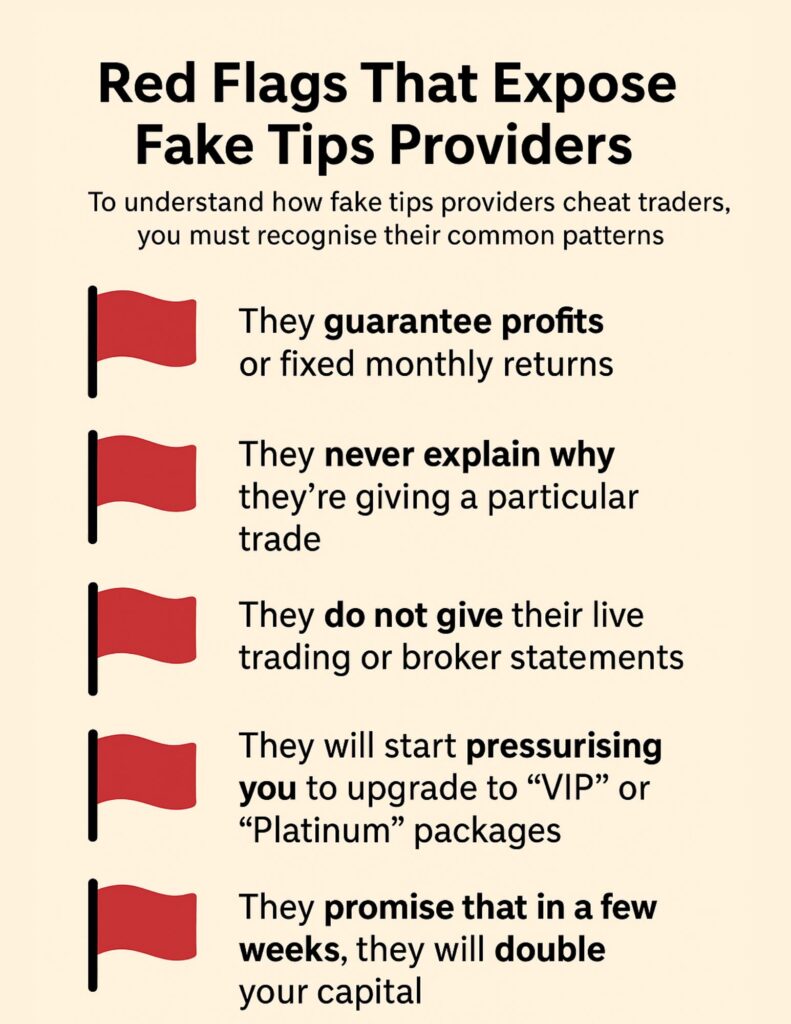
To understand How Fake Tips Providers Cheat Traders, you must recognise their common patterns. Here are some instant red flags:
- They guarantee profits or fixed monthly returns.
- They never explain why they’re giving a particular trade.
- They do not give their live trading or broker statements.
- They will start pressurising you to upgrade to “VIP” or “Platinum” packages.
- They promise that in a few weeks, they will double your capital.
A real educator or analyst will speak about risk management, market conditions, and learning, not profits that are ensured.
Emotional Exploitation – Fear and Greed
At the core of How Fake Tips Providers Cheat Traders lies emotional exploitation. They play on two major feelings: greed and fear.
They make you greedy by showing massive profits and telling you that you’re missing out. Then, they make you fearful by saying the opportunity will vanish soon or that only “limited slots” are available.
Once you fall into that emotional trap, rational decision-making ends, and impulsive trading begins. That’s when most traders lose both money and confidence.
The Aftermath – Blame Game and Vanishing Acts
Another ugly side of How Fake Tips Providers Cheat Traders is what happens after you lose money. When their calls go wrong, they blame you, saying you didn’t follow the entry level, stop loss, or exit timing properly.
Even some close their channels and return with a new name after weeks. Since payments are often made via UPI or wallets, recovering funds is almost impossible.
That’s why education and awareness are the only long-term shields against such frauds.
How to Verify a Tips Provider Before Trusting Them
Before subscribing to anyone’s signals, follow this checklist to prevent becoming a victim of How Fake Tips Providers Cheat Traders:
- Ask for verified trade history with order IDs and timestamps.
- Paper traders trade their signals for at least 2 weeks before putting in real money.
- Check community reviews on independent platforms such as Reddit or Quora.
- Steer clear of anyone who rushes you into it.
- Pay attention to the logic behind the call rather than just copying it.
A real expert will never obscure his methodology or results; he will explain to you the ‘why’ behind every choice.
What to Do If You’ve Been Scammed
If you’ve already fallen into this trap, don’t panic. The most practical way to handle it is to document everything.
Here is what to do:
- Take screenshots of all chats, payment proofs and signals.
- Report the account on the social media platform and to the cybercrime cell (especially if the fraud amount is large).
- Inform your broker or trading platform.
- Warn others in trading communities; awareness can save someone else’s hard-earned money.
Learning from mistakes is part of every traders journey. But make sure you don’t repeat them.
The Right Alternative – Learn, Don’t Rely
The best way to end the cycle of How Fake Tips Providers Cheat Traders is by learning the stock market yourself.
Once you understand technical analysis, market psychology, and risk management, you will never be dependent on someone else’s signals. Education empowers you to make your own decisions.

Conclusion
Every beginner needs to understand how fake tips providers cheat traders. These scammers will thrive on inexperience, greed, and lack of awareness. But once you recognise their tricks-from fake screenshots down to psychological manipulation are rendered immune to it.
Remember, no one can guarantee profits in trading real success comes from constant learning, discipline, and proper risk management.
If you really want to learn how to trade and not follow random calls, then it’s time for an investment in your education.